Google Ads vs SEO for Restoration Companies: Which Actually Generates Better Jobs?
Google Ads and SEO are the two primary ways restoration companies generate inbound jobs online. Both can produce water damage, fire damage, and mold remediation calls, but they operate very differently. If your goal is consistent, high-quality job flow, understanding how each channel works – and where each one fits – is critical.
Overview: Google Ads vs SEO
Google Ads provides immediate visibility by placing your business at the top of search results through paid placements. SEO, on the other hand, builds long-term visibility by ranking your website and Google Business Profile organically.
- Google Ads = immediate traffic, ongoing cost
- SEO = long-term traffic, compounding return
Most restoration companies use both, but the balance determines profitability.
How Google Ads Works for Restoration
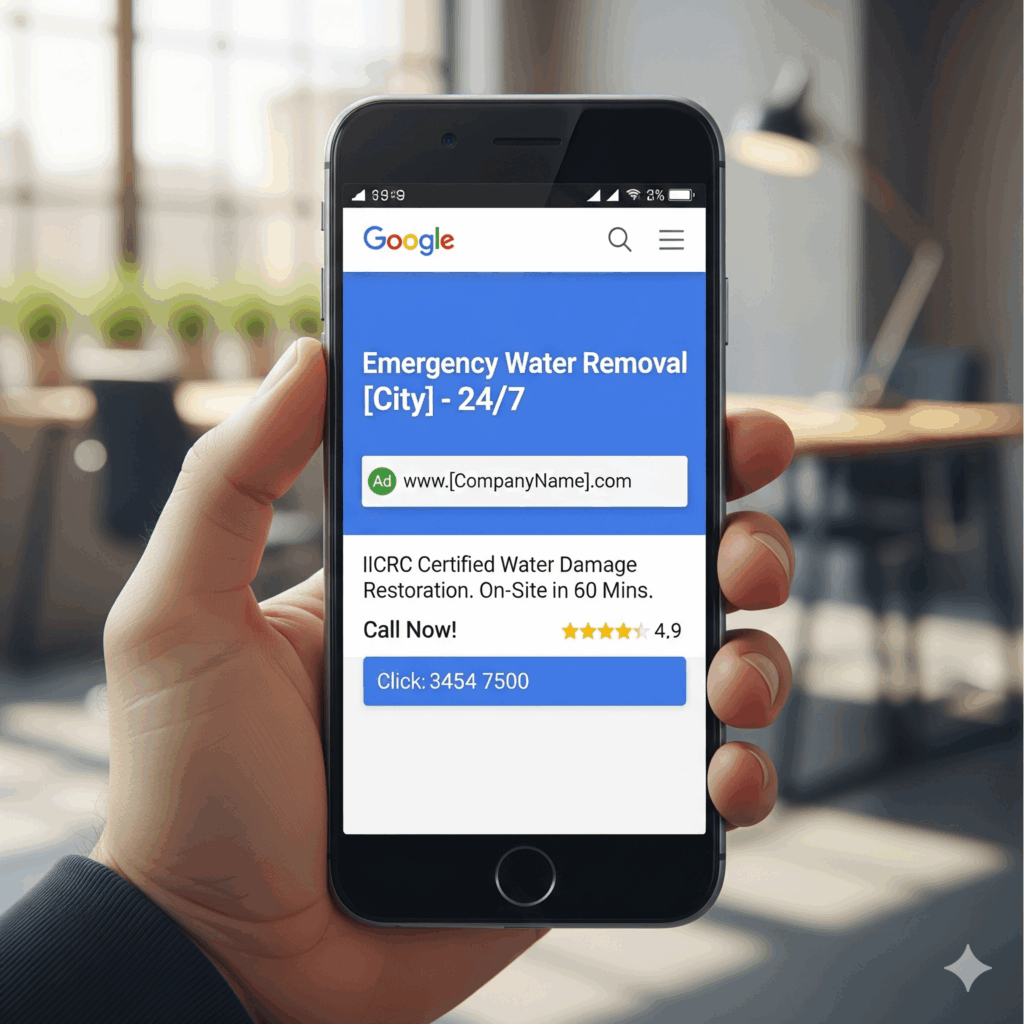
Google Ads allows restoration companies to bid on high-intent keywords such as:
- “water damage restoration near me”
- “emergency water extraction”
- “fire damage cleanup”
Advantages
- Immediate visibility
- Control over targeting
- Scalable with budget
Disadvantages
- High cost per click
- Stops when budget stops
- Competitive bidding environment
Ads are effective for short-term demand but can become expensive over time.
How SEO Works for Restoration Companies
SEO focuses on ranking your business in organic search results and the Google Map Pack.
Learn more about restoration seo.
Core Components
- Google Business Profile optimization
- Service page creation
- Local SEO signals
- Content strategy
Advantages
- Lower long-term cost per lead
- High-intent inbound traffic
- Compounding growth over time
Disadvantages
- Takes time to build
- Requires ongoing optimization
SEO is the foundation of consistent job generation.
Lead Quality Comparison
Lead quality is one of the biggest differences between these channels.
- SEO leads: higher trust, higher conversion rates
- Ad leads: often more competitive and price-sensitive
Customers tend to trust organic results more than paid ads.
Cost Comparison
- Google Ads: high and continuous cost
- SEO: upfront investment, lower ongoing cost
Over time, SEO produces a significantly lower cost per lead.
Speed vs Long-Term Growth
Google Ads
Delivers immediate traffic and leads.
SEO
Builds slowly but compounds over time.
This trade-off is critical when planning your marketing strategy.
When to Use Google Ads
- Launching a new market
- Need immediate lead flow
- Filling short-term gaps
Ads are best used as a temporary accelerator.
When to Use SEO
- Building long-term demand
- Reducing cost per lead
- Establishing market authority
SEO should be the foundation of your strategy.
Best Strategy: Combining Both
The most effective approach combines both channels:
- Use ads for immediate traffic
- Build SEO for long-term growth
This aligns with how how restoration companies get jobs in real-world scenarios.
Supporting both channels with strong restoration marketing strategies ensures consistent results.
[bright_reviews business_id=”150644″ variant=”slides” limit=”10″ box=”0″ show_header=”0″]
Common Mistakes
- Relying only on ads
- Ignoring SEO
- Not tracking performance
- Poor landing page conversion
- Inconsistent strategy
These mistakes lead to wasted budget and missed opportunities.
FAQs
Is SEO better than Google Ads for restoration companies?
SEO is better for long-term growth, while ads provide immediate results.
How long does SEO take?
Initial results typically appear within 30–90 days.
Are ads worth it?
Yes, but they should not be your only strategy.
Which produces better leads?
SEO generally produces higher-quality leads.
What is the best approach?
Use both, but build SEO as your foundation.