How to Rank a Restoration Company
Ranking a restoration company on Google is not about a single tactic. It requires aligning local visibility, organic search rankings, and conversion systems so your business appears exactly when high-intent searches happen. In emergency-driven industries like water damage, fire restoration, and mold remediation, the company that ranks first often gets the call.
This guide breaks down the exact framework used by top-performing restoration companies to dominate both the Map Pack and organic search results.
Table of Contents
How Google Ranks Restoration Companies
How to Rank in the Map Pack
How to Rank in Organic Search
Keyword Strategy
Content Strategy
Authority and Backlinks
Turning Rankings Into Jobs
Step-by-Step Implementation
How Google Ranks Restoration Companies
Google uses three primary factors to rank restoration companies:
- Relevance: How well your content matches search intent
- Authority: The trustworthiness of your website
- Proximity: How close your business is to the searcher
Companies that align all three consistently appear in both the Map Pack and organic listings. A structured damage restoration SEO strategy ensures these signals work together rather than independently.
How to Rank in the Map Pack
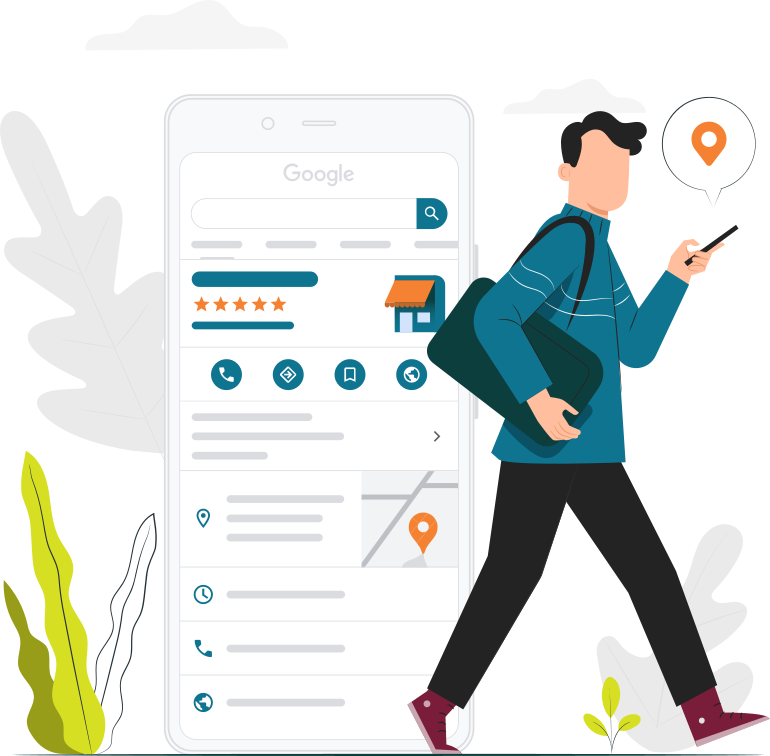
The Map Pack is where most restoration calls originate. It appears at the top of Google results and includes three local businesses.
To rank in the Map Pack, you must optimize your Google Business Profile effectively.
Key factors include:
- Accurate business information (NAP)
- Primary and secondary service categories
- Consistent review generation
- Frequent updates and posts
- Service area alignment
Consistency and activity signals are critical for maintaining top positions.
How to Rank in Organic Search
Organic rankings support your Map Pack visibility and allow you to capture additional traffic. Restoration companies that dominate organic search typically have structured service pages and supporting content clusters.
This includes:
- Dedicated pages for each service (water, fire, mold)
- Location-specific pages
- Supporting blog content
- Strong internal linking
Organic SEO builds long-term visibility and reduces reliance on paid advertising.
Keyword Strategy
Keyword strategy determines what your business ranks for. High-intent keywords should be prioritized:
- Water damage restoration
- Fire damage cleanup
- Mold removal services
- Emergency restoration near me
These searches indicate immediate need. Capturing them consistently requires a strong restoration lead generation system that aligns with your SEO efforts.
Long-tail keywords such as “burst pipe cleanup” or “basement flood restoration” often convert at higher rates due to lower competition.
Content Strategy
Content is what expands your visibility across multiple searches. Instead of relying on a few pages, top-performing restoration companies build content clusters around each service.
For example, a water damage cluster should include pages designed to capture water damage leads from different search variations.
This allows your site to rank for both broad and long-tail keywords.
Authority and Backlinks
Authority signals determine how competitive your site can be. Backlinks, citations, and brand mentions all contribute to authority.
Effective strategies include:
- Links from relevant industry websites
- Local citations
- Partnership-based mentions
- Content that earns natural links
Authority building is what allows your site to compete in larger markets.
Turning Rankings Into Jobs
Ranking is only part of the equation. Conversion determines whether traffic turns into revenue.
Key elements include:
- Click-to-call buttons
- Clear messaging about emergency response
- Trust signals (certifications, reviews)
- Fast-loading mobile pages

This is what high-intent restoration search results look like. The Map Pack and top organic listings capture the majority of calls, which is why visibility across both areas is critical for consistent job flow.
When homeowners search for emergency services, they typically choose from the first few visible options. Companies that implement a structured damage restoration SEO strategy position themselves in these top spots, increasing the likelihood of receiving inbound calls during urgent situations.
Strong conversion optimization for restoration companies ensures your visibility translates into booked jobs.
Step-by-Step Implementation
To rank your restoration company on Google, follow this framework:
- Optimize your Google Business Profile
- Build high-quality service pages
- Create supporting content clusters
- Develop internal linking between pages
- Build authority through backlinks and citations
- Implement conversion-focused design
When executed correctly, this system creates consistent visibility, inbound calls, and predictable job flow.